

Anticipation is an important part of playing tennis. The best players in the world are experts at both anticipating and misdirecting their opponents.
Anticipation in tennis is the ability to predict what an opponent’s next move will be. Accurately predicting a competitor’s court positioning, type of shot, and shot placement can allow a player to better control the gameplay, which, in turn, leads to scoring more points.
Continue reading to better understand how to anticipate your opponent’s actions during tennis matches. Including how to foresee what the other player (or players if playing doubles) is going to do, how to best position yourself, and shot selection.
We also include some tips for how to improve your anticipation skills and discuss some patterns of play that may help you better control the exchange.
Predicting Shots
When predicting an opponent’s next shot, there are a few tactics you can implement to get better at it.
First, study your opponent. Look for their tendencies and habits. For example:
- Does the player hit cross-court shots when hitting from the right baseline?
- Is there a preference to hit slice shots when under pressure?
- Or is there a type of shot hit on the return when you serve to an opponent’s backhand?
When you’ve studied your competition’s tells, you can begin testing their reactions to various shots of your own, such as placement, spin, pace, etc.
When playing an aggressive competitor, you also want to observe their racket angle, body alignment, and court positioning when hitting shots in effort to put yourself in the most opportune position.
Footwork & Court Positioning

If you’ve played tennis for a while, you already know footwork and court positioning is a very important aspect of the game. Footwork leads to improved movement, balance, and court awareness, which drastically improves your anticipation abilities.
With practice, you instinctively make the right step and position yourself in an optimal striking zone.
Knowing whether a split step or lateral movement, for example, is right during critical transitions, defending, and striking is a split-second decision that can be made easier if you can predict what your opponent’s going to do.
Serves, Returns & Rallies
When serving, you may be able to force a more favorable return shot based on your placement and serve speed. Pros generally rely on speed to cause their opponent to return a less aggressive shot; however, a well-placed serve can achieve similar results.
Top players are very good at reading a server’s toss, feet placement, and body language to predict direction. If you can recognize quirks in your opponent’s serve, you can make those instantaneous footwork adjustments to position for a better shot.
Tennis fans love a good rally. During back-and-forth play, great tennis athletes are able to analyze shot patterns to anticipate the other player’s movements and ball placements and use this info to make proactive shot selections.
Anticipation Tips
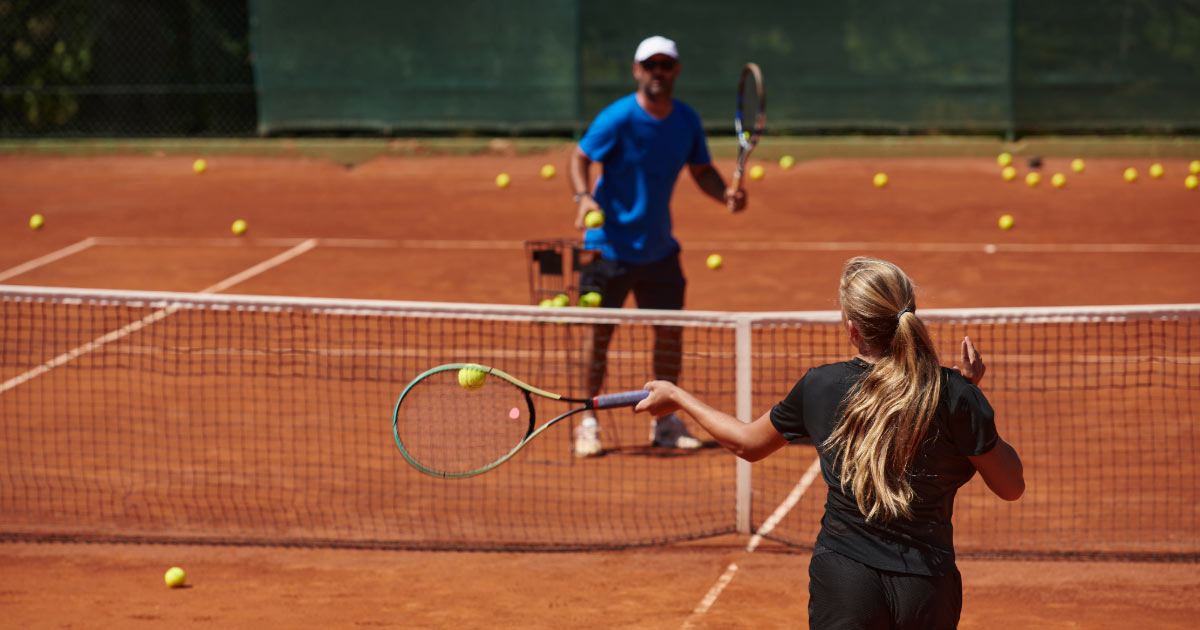
Here are a few tips you can use to get better at anticipating tennis plays.
#1 Watch for Patterns
Study your opponent. If he or she is playing an earlier match, go watch it. Look for their tendencies under different scenarios and use this information to take control of as many points as you possibly can.
#2 Read Body Language
Look at your opponents feet, body direction, posture, and racket use–forehand, backhand, striking angel–for clues about shot direction.
#3 Practice Split-step Timing
Mastering the split-step in tennis is a great way to react more quickly to an opponent’s shots. Getting into the right position to strike a ball is a matter of time, quite literally fractions of a second, and having your split-step timing down can be the difference.
#4 Run Practice Drills
We’ve said it before and it’s worth repeating: practice makes perfect! Run drills, mimic real-game scenarios, and develop the muscle memory needed to be a great anticipator.
#5 Adapt & Adjust
Know that every opponent is different. They often have similarities, but they definitely have their own unique styles of play. A good player might consciously try to avoid tells. Keep this in mind during matches, fight the frustration this may cause, and adjust your gameplay accordingly.
Do You Have More Questions About Tennis?
If you’re interested in learning more about the sport, consider joining a local club. Accelerate your tennis skills by joining a group class or getting private lessons. If you have more questions about tennis–pro players, tips for new players, commonly used terms–check out our tennis blog or send our team a message directly!


