

Court coverage is a super important tool for everyone who plays tennis. When you understand how to cover the playing field, you better position yourself to get more points, reach tougher shots, and control rallies. Regardless of whether you’re new to the sport or have been playing for years, better court coverage can make a huge improvement to your game.
Below we explain what court coverage is and what it means to be good at it, why it matters, and what you can do to improve at it. We also share movement tips, positioning ideas, and what to avoid when out on the court.
Court coverage describes how well a player moves to and positions themselves to return shots from anywhere on the court.
What Does it Mean to Have Good Court Coverage in Tennis?

Court coverage is how well you move to get to balls and stay in a position to return them. It is not about running quickly. It’s about moving intelligently and being prepared.
An effective covering player hits more shots and maintains better balance of their body while striking. It makes the rally go on and puts pressure on the other player to play riskily. Proper court coverage requires good footwork, reaction time, and being in the right position. Out of position, you will either miss or hit a weak shot.
The top players don’t run after every ball like madmen. They employ angles, make the correct steps, and get back fast following every shot.
In other words, court coverage is your capacity to remain ahead of the ball and arrive there irrespective of your location on the court.
Why Does Court Coverage Matter?

Court movement keeps you in the game longer. If you can’t reach the ball, you can’t return it, it’s as simple as that. Being able to move well provides more chances for you to remain in the rally and convert defense into attack.
It also minimizes errors. Fast movers possess better balance at the time of impact, which produces cleaner, more controlled shots. This reduces unforced errors and puts pressure on the opponent. Proper court coverage helps you to adjust to different styles of play. If your opponent plays spin, speed, or placement, you can adjust and react without panic.
It’s not a matter of being everywhere simultaneously. It’s a matter of being where you need to be at the right moment. That’s what makes covering courts a worthwhile skill on any level.
5 Key Elements of Good Court Coverage

Here’s what makes a player good at covering their side of the tennis court:
#1 First Step
Several skills intersect to give you great court coverage, but one of the most significant elements is your first step. A quick, explosive move right after your opponent’s shot gets you to the ball earlier.
#2 Good Footwork
Footwork also counts. Quick, controlled steps keep you in balance and enable smooth direction changes. You don’t have to run all over the court—just move effectively.
#3 Positioning
Positioning is also a big factor. You must position yourself in a way that you can cover the most ground based on where your opponent is most likely to attack next.
#4 Anticipation
Anticipation ties it all together. Reading your opponent’s tendencies and body language enables you to move early and in a specific direction.
#5 Recovery
Lastly, recovering after every shot makes you prepared. Once you have hit, return to the middle to prepare for the next ball.
Footwork & Movement Technique Tips

Good footwork starts with your stance. Stay low with your knees bent and your weight on your toes. This sets you up to move in any direction as fast as you can.
Take a half step to the right as your opponent is striking the ball. It’s a slight jump that re-establishes your balance so you can push off right away.
Take short, quick steps and not lunge. Strides will cause you to become unbalanced and make it more difficult for you to adapt. Small steps provide you with greater control and timing.
Move purposefully. Don’t shuffle helplessly or chase the ball too late. Your objective is to get to the ball early enough to strike it cleanly in balance. Footwork requires practice but is one of the quickest ways of improving court coverage.
How to Anticipate Opponent Shots

Anticipation allows you to react prior to the ball being struck. This gains you time and gets you into position.
Watch your opponent’s body. The position, swing, and release are all indicators. An open stance will more likely result in a cross-court shot. A closed stance will incline the ball to go down the line. Learn tendencies. Certain players prefer forehands under pressure or cross-court over down the line. The more you play, the more you can pick up on tendencies.
Watch the ball as well. The way it leaves the strings will determine direction and spin.
Don’t speculate. Make intelligent shots based on what you observe. Anticipation is not chance – perception, observation, and response to subtle cues before the ball is out of the racquet.
How Does Court Coverage Differ for Singles & Doubles Play?
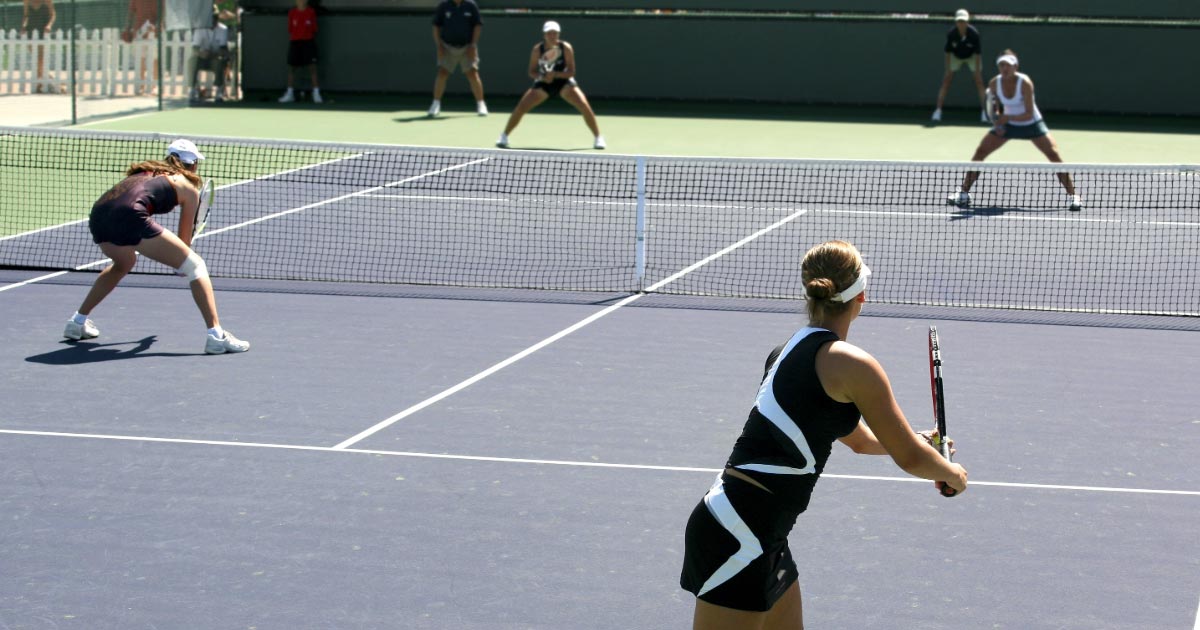
Singles and doubles each demand their own distinctive movement and positioning styles. Singles demand that you cover the whole court. This involves chasing down wide shots, returning lobs, and returning serves from anywhere. You must move economically and recover your position quickly after every shot.
Doubles is more of a team effort. You do share the court, so there is less ground to cover, but you need quicker reactions, especially at the net. You need to communicate with your partner to avoid gaps and overlap.
For singles, control and balance at baseline are most important. For doubles, awareness of the court and when to change, poach, or stand your ground. Both styles need good court coverage, but both need different sets of skills to continue being effective.
5 Common Court Coverage Mistakes to Avoid

If mastering court coverage is at the top of your tennis goals, you’ll want to be aware of common mistakes players make so that you can avoid them.
#1 Don’t Play Flat-footed
One of the biggest mistakes is being flat-footed. If you don’t have live feet, you’re slower to react and lose balance on shots.
#2 Move Sooner, Rather than Later
Another widespread error is moving too late. If you’re only responding after the ball clears the net, you’re already in trouble. Start moving when your opponent swings.
#3 Don’t Get Ahead of the Ball
Some players overrun the ball. They get there but are not able to stop or turn quickly enough. This leads to shaky shots or errors.
#4 Recover & Reposition After Every Shot
Poor recovery is also an issue. Upon contact, most players look at the ball or step out of position and neglect to leave part of the court covered.
#5 Trust Your Instincts
Finally, don’t guess. Guessing leads to bad positioning. Read the shot, stay tuned, and trust your movement and instincts instead.
Interested in Taking Tennis Lessons in Mountlake Terrace?
Are you or a family member interested in learning how to play tennis? If you live in or near Mountlake Terrace, Basha Tennis wants to help you along your journey! We offer group lessons for adults and youth players, plus we have private lessons available upon request.
If you’re looking for some friendly advice or tips on how to improve your tennis game, we also provide a wealth of knowledge via our tennis blog. In addition, you’ll find helpful resources throughout our website, including our tennis glossary. Reach out today with any questions you may have.


